Lisette’s story
Introduction
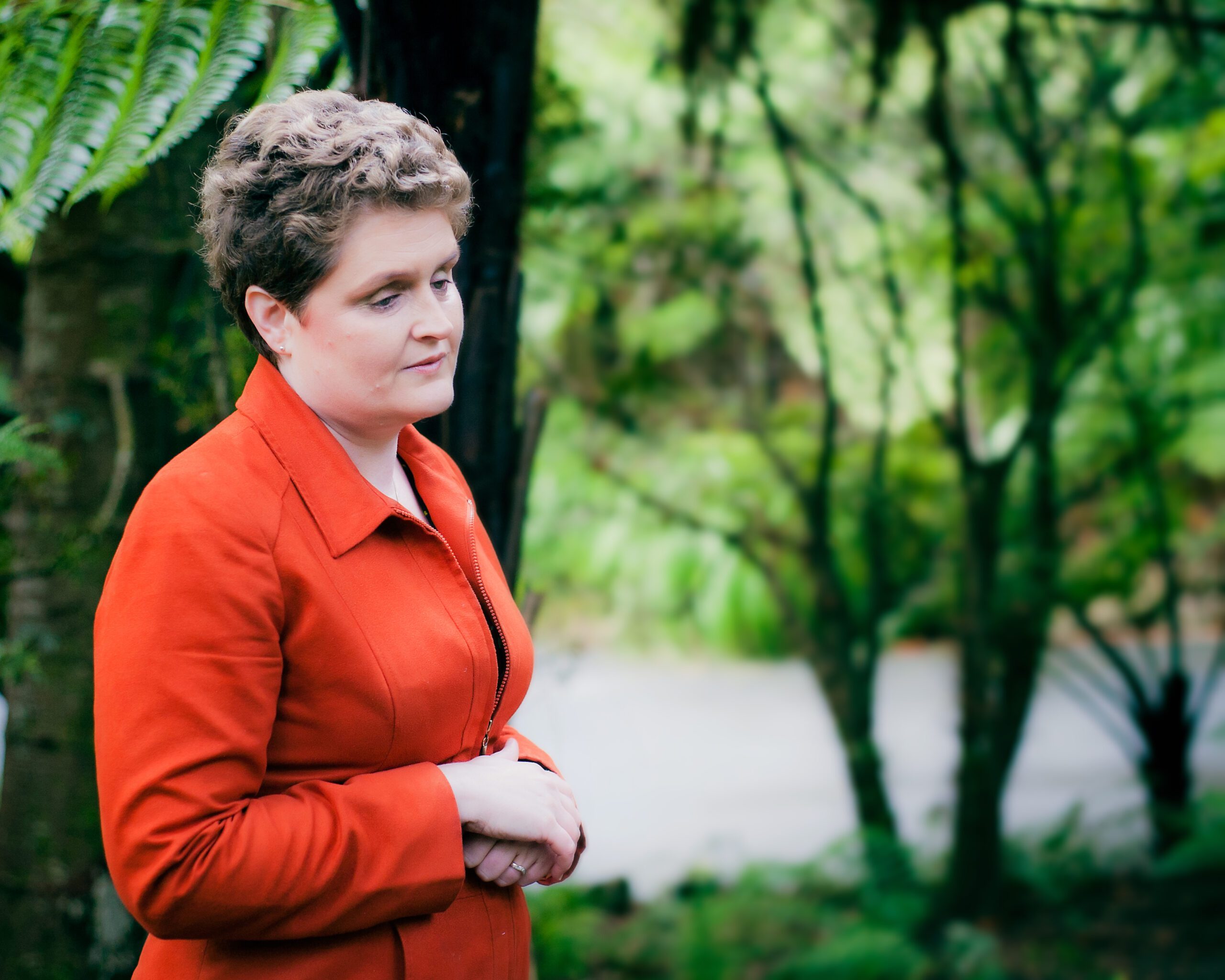
Elisabeth Jacoba Maria Wesseling (Lisette), soprano, singing teacher, Braille advocate. Born in October 19, 1971, in the Netherlands. Married to Neil Jarvis. Died September 12, 2016 in Wellington, aged 44.
There is a saying that Braille users are leaders in life. This proved to be true for Lisette Wesseling, a professional soprano, singing teacher and advocate for the blind.
Lisette, who was born blind, lived a life without limits and never saw her blindness as a barrier to what she wanted to achieve in life. Her successes were many, both personally and for the causes she championed.
Background
As well as forging her own successful career on the stage and as a recording artist, she helped other blind people access music education and performance. She combined her two great passions in life when she published a book on Braille music that helped visually impaired people read music.
Lisette taught both Braille and singing, believing both to be talents that granted freedom of expression for the learner.
She also worked part-time at The Blind Foundation, first as a Braille teacher helping people understand new technology specifically for the blind, and later as a Braille awareness consultant. She led the charge promoting Braille into mainstream society, advocating for it to be used in official signage, on restaurant menus, in lifts and on various other public material.
Lisette was instrumental in getting NZ Post to teach its ‘elves’ Braille so that they might read and respond to blind children’s letters to Santa.
Her death, at the age of 44, was a blow to the blind community.
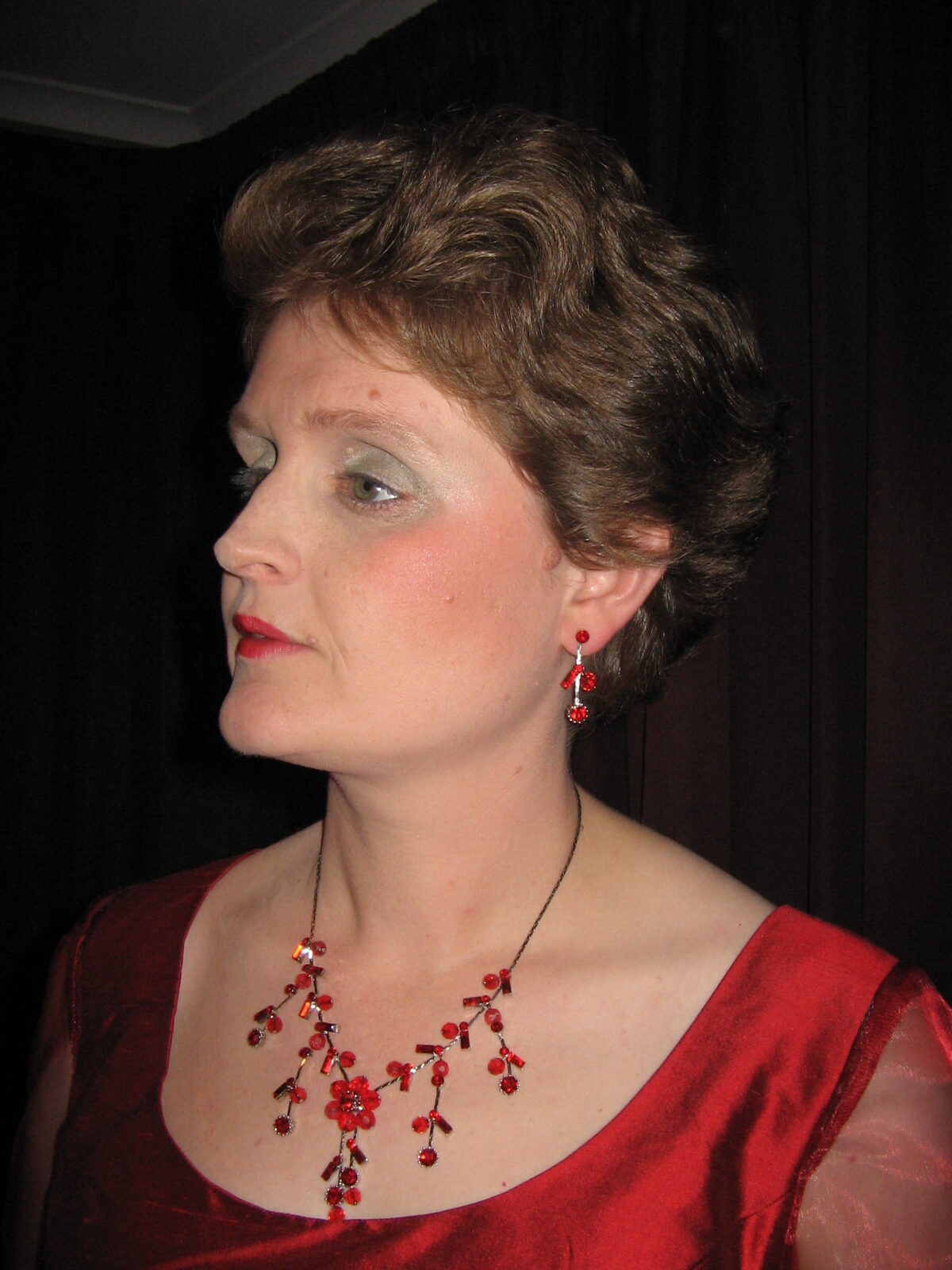
Lisette was born in the Netherlands and raised there with her older brother and sister till she was eight when the family immigrated to New Zealand in 1980.
Her father was a baker and ran a family bakery in Manurewa with her mother.
Lisette was a brave kid who was not afraid of taking risks. Being blind was no barrier when she learned to ride a bike.
Education
Lisette went to Homai School for the visually impaired in South Auckland and attended Manurewa High School, a mainstream school, for her secondary education.
She started a degree in psychology at Auckland University but quickly changed to a music degree, indulging her life-long passion for singing.
After graduating in 1993, she moved across the ditch to further her studies at Melbourne University. She graduated with an honours in music in 1997 then set her compass for London. It had long been her ambition to study at the Guildhall School of Music and Drama and it was here she did her postgraduate studies under the tutelage of Dame Carolyn Emma Kirkby, an English soprano she held in high regard.
The move to London was difficult at first. She recalls being a small fish in a big pond. But she immersed herself in London life, performing and studying for five years.
Career and romance
Lisette performed with several early music ensembles, including the Sweelinck Ensemble, which was chosen as a finalist in the York Early Music Competition and broadcast on BBC Radio 4. She gave a performance at the Purcell Room with the Sienna Ensemble, with whom she recorded a CD in 2002, and featured as a soloist on BBC Radio 4 as part of the Benjamin Britten Young Artist Programme.
It was while she was living in London’s East End that Lisette met her husband, Neil Jarvis. After installing a new computer system for Wesseling, the pair became friends and eventually fell in love.
Neil is also blind but it was not this that drew them together, he said. Blindness was simply something they had in common, not something that defined their relationship or them as individuals.
Their return to New Zealand in 2004 came about after the couple had made several trips home following invitations for Wesseling to sing at various concerts.
In the end, it was easier to base themselves here and they settled in Wellington’s Newtown.
Lisette began performing in solo concerts and with ensembles, such as the Handel Consort and Quire, Bach Musica and Musica Sacra. She was a regular soloist at Wellington Cathedral of St Paul and appeared with Baroque Voices and the Kapiti Chamber Choir. She was a soprano soloist with the Orpheus Choir.
Lisette was featured on a CD of music for soprano, harp and alto trombone in 2009 and in 2013, she released her own solo CD, Music In My Mouth.
She saw the arts as an essential part of life and something that should be accessible to everyone.
“Disabled people want to share in the beauty of this world and also help create beauty as artists,”
Wesseling, for Arts Access Aotearoa.
Lisette taught singing to both children and adults for more than a decade. She saw her talent as a gift and teaching was a way she felt able to give back. She believed everyone who wanted to sing, whether they had a talent for it or not, deserved the chance to learn the art.
Singing was a means of expression for her and a way she could express her strong Christian faith, Jarvis said. She felt free when she was singing. Although she could not see the audience when she performed on stage, she knew when they were engaged.
“I can certainly tell when the audience has been touched. You can feel the energy and know that something has happened”
Wesseling, 2010
Johann Sebastian Bach was among her favourite composers.
“Bach is like climbing a mountain. It’s a struggle to learn but once you conquer it, it’s there in your head,”
Wesseling 2010, for The Wellingtonian
In her last few hours, Jarvis played his wife Handel, her own CD recordings and Bach as she slipped away. She once said Bach’s music took her on a journey.
“It’s like you’re on a magic carpet. I feel like I’m flying with it.”
Wesseling
Sources: Neil Jarvis, The Wellingtonian, The Blind Foundation of New Zealand.